
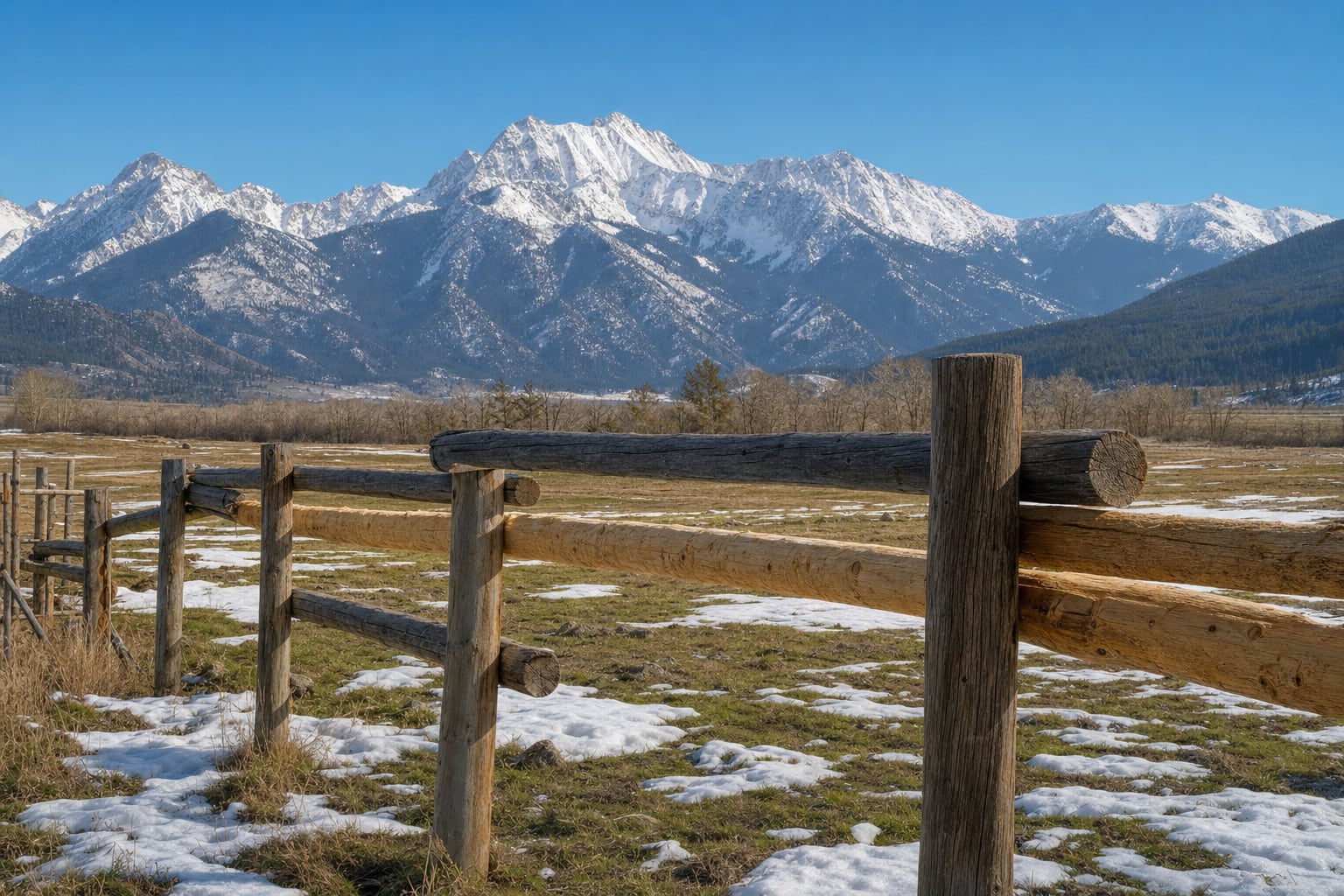
Snow, wind, and frost heave leave their mark by March. How to assess and repair your fence lines — and get replacement boards fast.
As the Montana winter gives way to the thawing embrace of spring, ranchers and homeowners find themselves confronting the aftermath of several months of harsh weather. The relentless snow, fierce winds, and insidious frost heave can wreak havoc on the miles of fence line that crisscross the rugged landscapes of Paradise Valley, Livingston, and beyond. Whether your property stretches across the rolling hills of Shields Valley or nestles closer to the vibrant communities of Bozeman and Big Sky, ensuring your fences remain functional and secure is an essential springtime task. In this article, we’ll guide you through the process of assessing winter damage, making necessary repairs, and sourcing high-quality replacement boards to keep your property secure all year round.
Understanding the Impact of Winter on Fencing
Winter in Montana is not just a series of picturesque snowfalls; it presents real challenges for maintaining the integrity of your fencing. Snow can pile up against your boards and posts, adding weight and pressure that can lead to bowing or collapsing. Meanwhile, strong winds can dislodge boards or even uproot entire sections of fencing. Frost heave, a phenomenon where the soil freezes and expands, pushes fence posts out of alignment, causing significant structural issues.
Understanding these winter forces is crucial for any property owner. It enables you to anticipate common problems and prepare accordingly. Knowing what to look for in terms of damage allows you to take prompt action, minimizing the time your property is vulnerable. This is especially important if your fences are tasked with containing livestock or protecting valuable crops from wildlife.
Inspecting Your Fence Lines After Winter
The first step in tackling fence repair is a thorough inspection. Start by walking the entire length of your fence line, noting any visible signs of damage. Look for boards that have been dislodged or broken, and check for posts that may have shifted due to frost heave. Pay special attention to any areas where the snowdrift was particularly heavy, as these sections are more likely to have experienced damage.
Use a level to check the alignment of your posts. Even a slight lean can indicate underlying issues with the stability of the post. Check that your gates open and close smoothly; issues here can suggest deeper alignment problems. Take detailed notes or photos of any damage you find, as this will help prioritize repairs and facilitate communication if you plan to work with a professional fencing crew.
Common Fence Repair Techniques
Once you've identified the damage, it's time to consider your repair options. For wooden fences, replacing broken or warped boards is a common task. Paradise Valley Timber Co. provides rough-cut lumber in full dimensions, ensuring you can find the right size and type of board to match your existing fence. If posts have been shifted by frost heave, they may need to be dug out and reset, a labor-intensive task but crucial for maintaining fence integrity.
For wire fences, check for sagging or snapped wires and use fence stretchers to re-tension them. Replacing barbed wire can be tricky; ensure you wear proper protective gear to avoid injury during this process. If your property has electric fencing, inspect each section for damage to the insulation or wiring, as these issues can impair the fence's effectiveness at containing livestock.
Choosing the Right Materials for Replacement
Selecting the appropriate materials for your fence repair is paramount to ensuring longevity and functionality. Rough-cut lumber from Paradise Valley Timber Co. offers a durable option for replacing fence boards and posts. Our lumber is available in full dimensions, including 2x6 boards, which are ideal for many fencing projects.
Consider the specific needs of your property. For example, if your fence line runs through areas prone to high winds, opting for thicker or heavier boards can provide additional stability. In contrast, fences in more sheltered locations might benefit from lighter materials that are easier to install and maintain.
Practical Steps to Replacing Fence Boards
Replacing a fence board is a straightforward task that most property owners can handle with the right tools and materials. First, gather your supplies: a replacement board, screws or nails, a saw for cutting the board to length, and a drill or hammer.
Begin by removing the damaged board. Use a pry bar to gently lift it away from the posts, taking care to avoid damaging the surrounding structure. Cut your replacement board to the appropriate length, ensuring it fits snugly between the existing posts. Secure the board in place using screws or nails, ensuring it is level and flush with the surrounding boards.
For a more polished finish, consider sanding the edges of the board before installation. This can help prevent splinters and improve the overall aesthetic of the fence.
Timing Your Fence Repairs for Optimum Results
Timing your fence repairs is critical in Montana's variable spring weather. Aim to complete repairs after the ground has thawed but before the heat of summer sets in. This ensures the soil is stable enough to support newly set posts and that you're not working in the height of summer when the heat can make outdoor labor uncomfortable.
Early spring is an ideal time, as it allows you to address winter damage promptly, reducing the risk of further deterioration. It also gives you a head start on any larger projects you might want to tackle during the warmer months, such as expanding your fence line or adding new gates.
Unique Considerations for Southwest Montana
Southwest Montana presents unique challenges and opportunities when it comes to fence maintenance. The varied terrain—from the flat expanses of Paradise Valley to the rolling hills of the Shields Valley—means that no two properties are alike in their fencing needs.
In Livingston and Bozeman, where properties might be more exposed to wind, choosing sturdy materials and reinforcing structures can prevent frequent repairs. In contrast, properties in Big Sky might deal with more snowfall, necessitating designs that allow snow to pass through without piling up.
Gardiner and surrounding areas near the Yellowstone border often contend with wildlife, making it essential to maintain strong, secure fencing to protect both livestock and gardens from wandering animals.
How to Order Replacement Boards and Arrange Installation
Ordering replacement boards from Paradise Valley Timber Co. is straightforward. Call us at 406-404-7501 to request current pricing and availability. Whether you’re picking up the materials yourself or arranging for delivery, our team is ready to assist you. Delivery options depend on the order size and location, and larger orders might qualify for discounted delivery.
For those who prefer professional installation, we work with a partner crew that offers expert fence installation services. This option is perfect for property owners who need extensive repairs or want to ensure the job is done to a high standard.
Frequently Asked Questions
What is frost heave and how does it affect fences?
Frost heave occurs when the soil freezes and expands, pushing objects like fence posts upwards. This can lead to misaligned posts, which in turn can cause the fence to lean or collapse. Repairing frost-heaved fences often involves resetting the affected posts once the ground has thawed.
When is the best time to inspect my fence?
The best time to inspect your fence is in early spring, as soon as the snow has melted enough to allow access to the entire fence line. This timing ensures that you can address winter damage promptly, reducing the risk of further deterioration.
How do I know if a board needs replacing?
A fence board needs replacing if it is cracked, warped, or broken. These issues not only affect the fence's appearance but can also compromise its structural integrity, potentially leading to further damage if not addressed.
Can I perform fence repairs myself?
Many property owners find they can handle minor fence repairs themselves, such as replacing boards or tightening wire. However, extensive repairs or those involving resetting posts might benefit from professional assistance, particularly if the fence is crucial for livestock containment.
Maintaining your fence line is a crucial aspect of property management in Montana. By taking the time to inspect, repair, and replace as necessary, you ensure the security and functionality of your property. For assistance with materials or installation, contact Paradise Valley Timber Co. at 406-404-7501 or request a quote today. We’re here to help with all your fencing needs, ensuring your property remains sturdy and secure through the seasons.
Questions about your project? Call 406-404-7501 or request a quote.